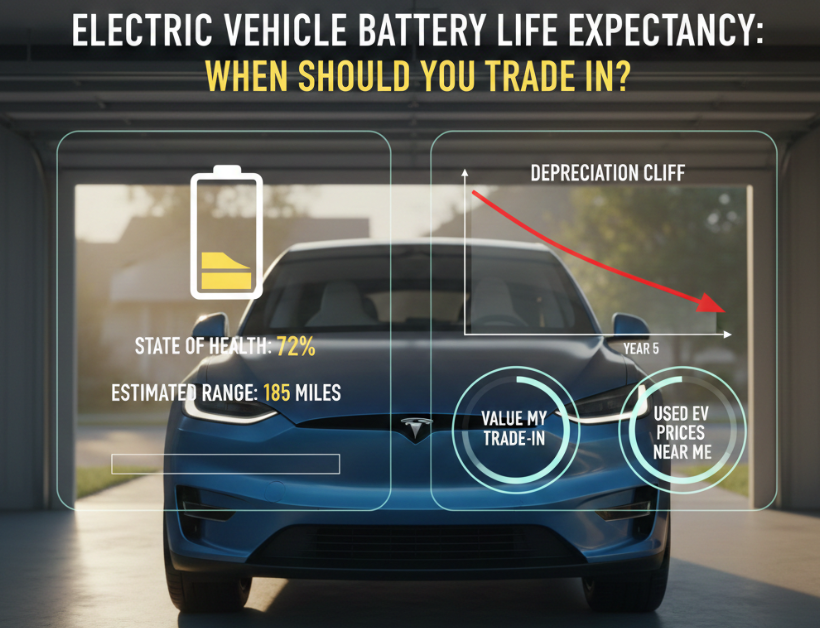
For most American drivers, the "check engine" light of the past has been replaced by a new concern: Battery Health. Since the battery pack is the most expensive component of an Electric Vehicle (EV)—often costing between $5,000 and $20,000 to replace—knowing when that battery is reaching its "sunset" period is the key to maximizing your vehicle's resale value.
If you are wondering whether to keep your EV for another year or trade it in while the value is still high, here is what you need to know about battery longevity and the financial "sweet spot" for selling.
How Long Do EV Batteries Actually Last?
Most modern EV batteries are designed to outlast the car itself. On average, an EV battery will lose about 1% to 2% of its range per year. Major manufacturers like Tesla, Ford, and GM typically offer a warranty of 8 years or 100,000 miles, guaranteeing the battery will retain at least 70% of its original capacity.
However, "lasting" and "performing well" are two different things. Once a battery drops below 70-80% State of Health (SoH), you’ll notice significantly shorter trips and slower charging speeds.
Battery Degradation Factors at a Glance
| Factor | Impact on Battery Life | Recommendation |
| Climate | Extreme heat degrades cells faster than cold. | Park in the shade or a garage. |
| Charging Habits | Constant Level 3 DC Fast Charging adds stress. | Use Level 2 home charging for daily use. |
| Charge Levels | Keeping the battery at 0% or 100% for long periods. | Aim for the "sweet spot" of 20% to 80%. |
| Mileage | High mileage naturally leads to more cycles. | Monitor range loss every 10k miles. |
The Financial "Sweet Spot": When to Trade In?
The goal of a smart trade-in is to sell the car before the "Depreciation Cliff." This cliff usually occurs right before the factory battery warranty expires.
1. The 60,000 to 70,000 Mile Mark
This is often considered the ideal window. The car still has roughly 30,000 miles of "peace of mind" warranty left for the next buyer, which keeps the resale value high.
2. The 5-Year Itch
Technology in the EV space moves fast. A 5-year-old EV likely lacks the charging speed and software efficiency of newer models. Trading in at the 5-year mark allows you to capture high "used car" demand before your tech becomes obsolete.
3. When Range No Longer Meets Your Daily Needs
If your 250-mile range has dropped to 180 miles due to degradation, it might still work for a city commuter, but its value as a "primary vehicle" is fading. Selling now allows you to market the car to a wider audience.
How to Check Your Current Value
Before you make a decision, you need to see what the market is willing to pay. Used EV prices fluctuate based on federal tax credit changes and local demand.
Pro Tip: Don't just look at KBB values. Real-time dealer inventory is a better indicator of what you'll actually get at the lot. To get an accurate estimate, you should start by looking up "Value my car trade-in" or checking "Used EV prices near me" to see what similar models are retailing for in your zip code.
Summary: Should You Sell or Hold?
-
HOLD if: You have a low commute, live in a temperate climate, and still have 4+ years of warranty remaining.
-
SELL/TRADE if: You are approaching 80,000 miles, live in a very hot climate (like AZ or TX), or notice a significant drop in winter range.
By trading in early, you can roll that equity into a newer model with better range, faster charging, and a fresh 8-year warranty.