Your Complete Guide to Roof Replacement in the USA: Making the Right Choice
Recognizing When It's Time for a New Roof Searching for "roof replacement cost estimator" or "how to know if I need a new roof"? You're tapping into one of the most significant home improvement decisions American homeowners face. Unlike simple repairs, a full roof replacement is a major investment that protects your home for decades. This guide combines homeowner search trends with industry insights from roofing manufacturers and contractors to help you navigate this complex process confidently.

Understanding the Roof Replacement Landscape: Materials and Technologies

Based on analysis of industry websites, today's roof replacement involves more choices than ever. Beyond traditional asphalt shingles, homeowners now consider:

Your Decision Roadmap: Repair vs. Replace

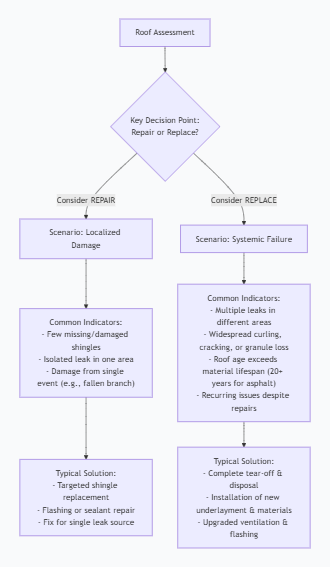
The first major decision is determining whether your situation calls for replacement. Use this comparison to guide your initial assessment:
Step-by-Step Guide to a Successful Roof Replacement

Step 1: The Initial Assessment and Research

  • Conduct a Thorough Inspection: Look for signs like daylight through roof boards in the attic, extensive moss or algae growth, sagging areas, or a large percentage of shingles showing damage.

  • Research Materials: Search for "asphalt shingle vs metal roof cost," "best roofing material for [your climate]," or "impact resistant shingles" to understand options.

  • Find Qualified Contractors: Use specific searches like "GAF certified roofing contractor" or "Owens Corning preferred contractor near me." Manufacturer certifications, like those shown on DiamondRidgeRoofingSystems.com, indicate training on specific material installation.

Step 2: Vetting Contractors and Understanding Quotes

Contact at least three reputable companies for detailed inspections and written proposals. A comprehensive quote should include:


Proposal Section What It Should Detail Why It Matters
Scope of Work Complete tear-off, disposal, number of layers removed, all materials (shingles, underlayment, flashing, vents, drip edge). Ensures you're comparing identical projects. Avoids "surprise" charges later.
Material Specifications Manufacturer, brand, product line, color, warranty period (often 25-50 years), wind rating. Material quality varies widely. This defines what you're paying for.
Labor Warranty Length of contractor's warranty on workmanship (typically 2-10+ years), what it covers. Protects against installation errors. Separate from manufacturer's material warranty.
Project Timeline Start date, estimated duration, crew size, cleanup process. Manages expectations and planning.
Payment Schedule Deposit amount, progress payments, final payment upon completion and inspection. Red Flag: Avoid contractors demanding full payment upfront.

Step 3: Navigating Financing and Insurance

  • Insurance Claims: If damage is from a covered peril (wind, hail, falling objects), your homeowner's insurance may cover replacement. Searches for "how to file a roof insurance claim" and "working with a public adjuster" spike after major storms. Documentation is key.

  • Financing Options: Many contractors offer financing. Also search for "home equity loan for roof" or "energy efficiency financing programs" which may offer tax incentives for certain reflective or insulating roof systems.

Step 4: During the Replacement Project

  • Prepare Your Property: Move vehicles, secure patio furniture, cover items in the attic from dust, and consider informing neighbors about noise.

  • Ask About the Process: A proper tear-off removes all old material down to the decking. The crew will then install new underlayment (a critical water barrier), flashing around penetrations (chimneys, vents), and finally the shingles or other material.

  • Final Inspection: Do a walkthrough with the project manager. Ensure cleanup is thorough (magnetic nail pickup is standard), gutters are cleared, and you receive all warranty paperwork and manufacturer documentation.

Case Study: The Johnson Family's Proactive Replacement

The Situation: The Johnsons owned a 25-year-old home in the Midwest with the original asphalt roof. While it wasn't leaking, they noticed excessive granule loss in gutters, several cracked shingles, and higher energy bills.
Their Research: They searched "lifespan of asphalt shingles," "signs of roof wear," and "roof replacement before leak." They also researched "solar reflective shingles" to address energy costs.
The Process: They obtained three quotes. All recommended full replacement due to age. They chose a contractor certified by a major shingle manufacturer, offering a strong labor warranty. The quote included synthetic underlayment (more durable than felt) and upgraded attic ventilation.
The Outcome: The project was completed in four days. The Johnsons financed part of the cost and used energy-efficient shingles that qualified for a local utility rebate. They now have a transferable 50-year material warranty, increased home value, and lower cooling costs, giving them peace of mind.

Key Warning Signs and Red Flags

  • Extreme Low-Ball Quotes: A bid significantly lower than others often means inferior materials, insufficient insurance, or costly change orders later.

  • Pressure to Sign Quickly: Legitimate contractors do not use high-pressure "today-only" discounts.

  • Lack of Detailed Contract: Never proceed without a written, detailed contract as described above.

  • Request for Large Cash Deposit: Standard practice is a modest deposit to schedule the job and order materials, not full upfront payment.

  • No Local Presence or References: Be wary of storm-chasing contractors with no permanent local office or verifiable local references.

Conclusion: An Investment in Protection and Value

A roof replacement is a substantial but critical investment. By understanding the signs that necessitate replacement, researching materials and contractors thoroughly, and knowing what to expect throughout the process, you can make an informed decision that will protect your home and family for decades. A quality roof replacement enhances curb appeal, improves energy efficiency, and provides invaluable peace of mind during every storm.

Disclaimer: This article provides general educational information. Roofing requirements, material suitability, and building codes vary by climate and locality. Always consult with multiple licensed and insured roofing professionals for inspections and recommendations specific to your home.


Trending Now
| 2026-01-29 11:24:32
Your Complete Guide to Roof Replacement in the USA: Making the Right Choice
Recognizing When It's Time for a New Roof Searching for "roof replacement cost estimator" or "how to know if I need a new roof"? You're tapping into one of the most significant home improvement decisions American homeowners face. Unlike simple repairs, a full roof replacement is a major investment that protects your home for decades. This guide combines homeowner search trends with industry insights from roofing manufacturers and contractors to help you navigate this complex process confidently.

Understanding the Roof Replacement Landscape: Materials and Technologies

Based on analysis of industry websites, today's roof replacement involves more choices than ever. Beyond traditional asphalt shingles, homeowners now consider:

  • Advanced Synthetic Roofing: Websites like FiberTite.com showcase single-ply synthetic roofing membranes, often used for commercial or low-slope residential applications. These are known for durability and weather resistance.

  • High-Tech Roof Scanning: Services like those from SkyTek Imaging.com use infrared and drone technology for roof moisture surveys and precise damage assessment without physical intrusion. This technology is increasingly searched for in insurance claim situations.

  • Weatherization & Efficiency: Resources like HomeSavingLives.com emphasize how a new roof, when integrated with proper attic ventilation and insulation, forms a complete weatherization system. This aligns with growing searches for "energy efficient roofing" and "cool roof" options.

Your Decision Roadmap: Repair vs. Replace

The first major decision is determining whether your situation calls for replacement. Use this comparison to guide your initial assessment:

Step-by-Step Guide to a Successful Roof Replacement

Step 1: The Initial Assessment and Research

  • Conduct a Thorough Inspection: Look for signs like daylight through roof boards in the attic, extensive moss or algae growth, sagging areas, or a large percentage of shingles showing damage.

  • Research Materials: Search for "asphalt shingle vs metal roof cost," "best roofing material for [your climate]," or "impact resistant shingles" to understand options.

  • Find Qualified Contractors: Use specific searches like "GAF certified roofing contractor" or "Owens Corning preferred contractor near me." Manufacturer certifications, like those shown on DiamondRidgeRoofingSystems.com, indicate training on specific material installation.

Step 2: Vetting Contractors and Understanding Quotes

Contact at least three reputable companies for detailed inspections and written proposals. A comprehensive quote should include:


Proposal Section What It Should Detail Why It Matters
Scope of Work Complete tear-off, disposal, number of layers removed, all materials (shingles, underlayment, flashing, vents, drip edge). Ensures you're comparing identical projects. Avoids "surprise" charges later.
Material Specifications Manufacturer, brand, product line, color, warranty period (often 25-50 years), wind rating. Material quality varies widely. This defines what you're paying for.
Labor Warranty Length of contractor's warranty on workmanship (typically 2-10+ years), what it covers. Protects against installation errors. Separate from manufacturer's material warranty.
Project Timeline Start date, estimated duration, crew size, cleanup process. Manages expectations and planning.
Payment Schedule Deposit amount, progress payments, final payment upon completion and inspection. Red Flag: Avoid contractors demanding full payment upfront.

Step 3: Navigating Financing and Insurance

  • Insurance Claims: If damage is from a covered peril (wind, hail, falling objects), your homeowner's insurance may cover replacement. Searches for "how to file a roof insurance claim" and "working with a public adjuster" spike after major storms. Documentation is key.

  • Financing Options: Many contractors offer financing. Also search for "home equity loan for roof" or "energy efficiency financing programs" which may offer tax incentives for certain reflective or insulating roof systems.

Step 4: During the Replacement Project

  • Prepare Your Property: Move vehicles, secure patio furniture, cover items in the attic from dust, and consider informing neighbors about noise.

  • Ask About the Process: A proper tear-off removes all old material down to the decking. The crew will then install new underlayment (a critical water barrier), flashing around penetrations (chimneys, vents), and finally the shingles or other material.

  • Final Inspection: Do a walkthrough with the project manager. Ensure cleanup is thorough (magnetic nail pickup is standard), gutters are cleared, and you receive all warranty paperwork and manufacturer documentation.

Case Study: The Johnson Family's Proactive Replacement

The Situation: The Johnsons owned a 25-year-old home in the Midwest with the original asphalt roof. While it wasn't leaking, they noticed excessive granule loss in gutters, several cracked shingles, and higher energy bills.
Their Research: They searched "lifespan of asphalt shingles," "signs of roof wear," and "roof replacement before leak." They also researched "solar reflective shingles" to address energy costs.
The Process: They obtained three quotes. All recommended full replacement due to age. They chose a contractor certified by a major shingle manufacturer, offering a strong labor warranty. The quote included synthetic underlayment (more durable than felt) and upgraded attic ventilation.
The Outcome: The project was completed in four days. The Johnsons financed part of the cost and used energy-efficient shingles that qualified for a local utility rebate. They now have a transferable 50-year material warranty, increased home value, and lower cooling costs, giving them peace of mind.

Key Warning Signs and Red Flags

  • Extreme Low-Ball Quotes: A bid significantly lower than others often means inferior materials, insufficient insurance, or costly change orders later.

  • Pressure to Sign Quickly: Legitimate contractors do not use high-pressure "today-only" discounts.

  • Lack of Detailed Contract: Never proceed without a written, detailed contract as described above.

  • Request for Large Cash Deposit: Standard practice is a modest deposit to schedule the job and order materials, not full upfront payment.

  • No Local Presence or References: Be wary of storm-chasing contractors with no permanent local office or verifiable local references.

Conclusion: An Investment in Protection and Value

A roof replacement is a substantial but critical investment. By understanding the signs that necessitate replacement, researching materials and contractors thoroughly, and knowing what to expect throughout the process, you can make an informed decision that will protect your home and family for decades. A quality roof replacement enhances curb appeal, improves energy efficiency, and provides invaluable peace of mind during every storm.

Disclaimer: This article provides general educational information. Roofing requirements, material suitability, and building codes vary by climate and locality. Always consult with multiple licensed and insured roofing professionals for inspections and recommendations specific to your home.


Trending Now