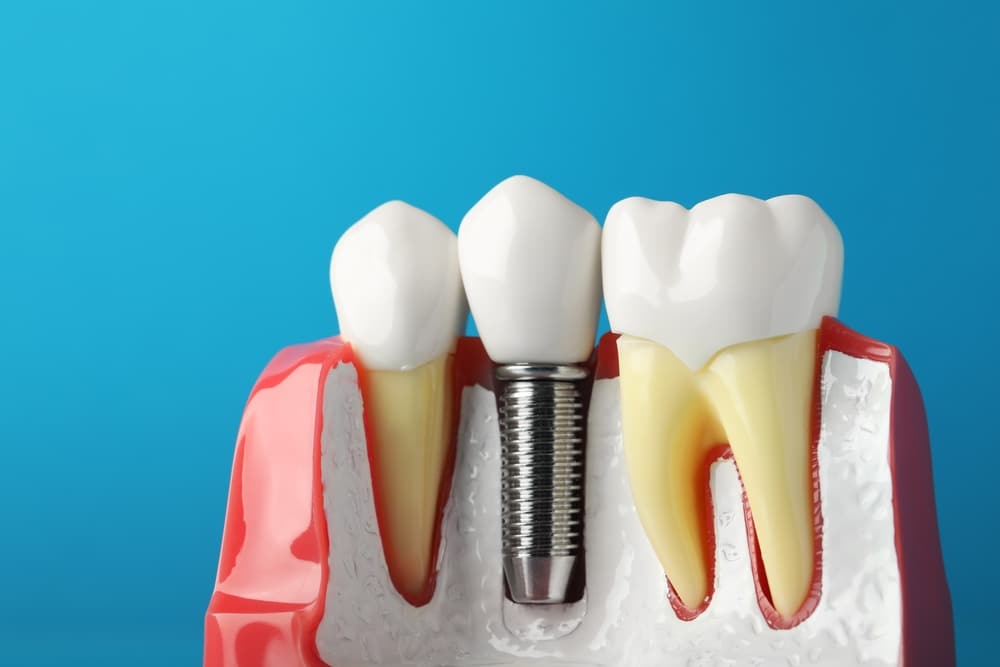
The demand for dental implants in the U.S. is skyrocketing, fueled by a population that's increasingly aware of long-term oral health solutions. From 1999 to 2016, the use of dental implants among American adults jumped from 0.7% to 5.7%, with projections suggesting it could reach up to 23% by 2026.
This surge reflects a fundamental shift from viewing tooth replacement as merely functional to embracing solutions that restore both confidence and quality of life.
Understanding the Fundamentals: What Are Dental Implants?
Dental implants are sophisticated medical devices that serve as artificial tooth roots, typically made from biocompatible titanium. Unlike removable dentures or traditional bridges, implants are surgically placed into your jawbone, where they actually fuse with the bone through a process called osseointegration.
This biological bond creates an exceptionally stable foundation for replacement teeth—whether you're missing one tooth, several teeth, or all of your teeth.
Here's why this technology represents such a significant advancement:
-
Preserves jawbone health: When you lose a tooth, the jawbone beneath it begins to deteriorate from lack of stimulation. Implants provide this necessary stimulation, preventing the bone loss that typically follows tooth loss.
-
Neighbor-friendly design: Unlike traditional bridges that require grinding down adjacent healthy teeth, implants stand independently without affecting surrounding teeth.
-
Natural function restored: With chewing power comparable to natural teeth, implants allow you to eat your favorite foods without restrictions or fear of slippage.
-
Long-term durability: With proper care, implants can last a lifetime, while the crowns on top typically last 10-15 years before needing replacement.
Breaking Down the Process: What to Expect Step by Step
The journey to getting dental implants typically unfolds in phases, allowing for proper healing at each stage. While timelines can vary based on individual circumstances, here's what you can generally expect:
1. Initial Consultation and Planning: This comprehensive appointment includes 3D imaging (like CBCT scans), impressions of your mouth, and a thorough examination of your oral and overall health. Your dental team will develop a personalized digital treatment plan, potentially using AI-powered software for precision.
2. Bone Preparation (If Needed): If your jawbone has diminished after tooth loss, you may require bone grafting to create a solid foundation. This procedure adds several months to the timeline as the graft material integrates with your natural bone.
3. Implant Placement Surgery: During this minimally invasive procedure, the titanium implant is precisely placed into your jawbone. Many practices now use computer-guided surgery for enhanced accuracy and faster recovery.
4. Healing and Osseointegration: Over the next 3-6 months, the implant fuses with your jawbone. Temporary tooth replacements may be provided during this period.
5. Abutment Placement: Once healing is complete, a small connector piece (abutment) is attached to the implant. In some cases, this can be done during the initial surgery.
6. Crown Placement: Finally, your custom-made artificial tooth (crown) is securely attached to the abutment, completing your smile restoration.
Key Decision Points: Materials, Techniques, and Technology
When considering dental implants, you'll encounter several important choices that affect both the process and outcome:
Implant Materials:
-
Titanium: The gold standard with decades of clinical success, known for its strength and biocompatibility.
-
Zirconia: A metal-free, ceramic alternative with a tooth-like color, ideal for those with metal sensitivities or concerns about aesthetics near the gum line.
Advanced Technologies Enhancing Outcomes:
-
Digital Impressions: Replacing traditional putty impressions with quick, comfortable intraoral scanning.
-
Computer-Guided Surgery: Using 3D imaging and planning software to create surgical guides for unparalleled precision.
-
Same-Day Implants: Also called immediate load implants, these allow for temporary teeth to be placed the same day as surgery in select cases.
Navigating Financial Considerations
Understanding the financial aspect of dental implants is crucial. While costs vary significantly based on geographic location, case complexity, materials used, and practitioner expertise, being informed helps you make sound decisions.
Typical Cost Range for a Single Dental Implant:
| Treatment Component | What It Includes | Relative Cost Factor |
|---|---|---|
| Initial Consultation | Examination, 3D imaging, treatment planning | Low to Moderate |
| Implant Surgery | Surgical placement of the titanium post | High |
| Abutment | Connector piece that attaches crown to implant | Moderate |
| Crown | Custom-made artificial tooth (material affects price) | Moderate to High |
| Additional Procedures | Bone grafting, sinus lifts, extractions if needed | Variable |
Note: These are relative cost factors rather than specific prices, which vary widely by practice and region.
Insurance and Financing:
Dental insurance coverage for implants varies tremendously. Some plans cover a portion (often similar to what they'd pay for a bridge), while others exclude implants entirely. Medical insurance may contribute if tooth loss resulted from an accident or medical condition.
Many dental practices offer:
-
Payment plans through third-party medical financiers
-
In-house membership plans for uninsured patients
-
Flexible Spending Account (FSA) or Health Savings Account (HSA) compatibility
How to Choose Your Dental Implant Provider: A Checklist
Selecting the right professional is perhaps your most important decision. Use this checklist when evaluating potential providers:
-
Credentials and Experience: Look for practitioners with additional training in implant dentistry (such as a periodontist, oral surgeon, or prosthodontist) or general dentists with substantial implant experience. Ask how many implants they place annually and request to see before-and-after photos of similar cases.
-
Technology Assessment: A practice investing in modern technology typically indicates commitment to quality care. Ask if they use 3D imaging, intraoral scanners, and computer-guided surgery.
-
Consultation Experience: Your initial consultation should be thorough, with ample time for questions. The team should explain all options without pressure and provide a detailed written treatment plan and estimate.
-
Patient Reviews and Testimonials: Read reviews across multiple platforms, paying attention to comments about the surgical experience, staff support, and long-term satisfaction.
-
Warranty and Follow-up Care: Inquire about warranties on the implant components and what follow-up care is included in your treatment fee.
Real Patient Journey: Maria's Story
Maria, a 58-year-old teacher from Chicago, struggled with a missing molar for years. "I avoided chewing on that side, which caused other problems," she shared. "I was intimidated by the implant process but finally scheduled a consultation."
Her dentist recommended a bone graft due to jawbone loss, followed by implant placement using computer-guided surgery. "The precision technology gave me confidence," Maria noted. Though the process took several months, she appreciated the staged approach. "Now I can eat anything without thinking about it. The investment in my health was worth every penny."
Maria's experience highlights three key lessons:
-
Address tooth loss promptly to prevent additional procedures like bone grafting
-
Modern techniques can enhance comfort and outcomes
-
Patience with the process yields long-term benefits
Maintaining Your Investment: Long-Term Care
Once your implant journey is complete, proper maintenance ensures longevity:
-
Daily Hygiene: Brush twice daily and floss around implants using tools designed for implant care
-
Professional Maintenance: Schedule regular cleanings and check-ups, typically every 3-6 months initially
-
Lifestyle Considerations: Avoid habits like chewing ice or hard candies, and if you grind your teeth at night, use a protective guard
-
Warning Signs: Contact your dentist immediately if you notice pain, swelling, looseness, or gum recession around your implant
The landscape of tooth replacement has fundamentally transformed. Where once the only options were removable appliances or bridges that compromised adjacent teeth, we now have permanent solutions that integrate with our biology. This evolution from replacement to true restoration represents one of dentistry's most significant advances—giving people not just functional teeth, but renewed confidence in their smiles and daily lives.